
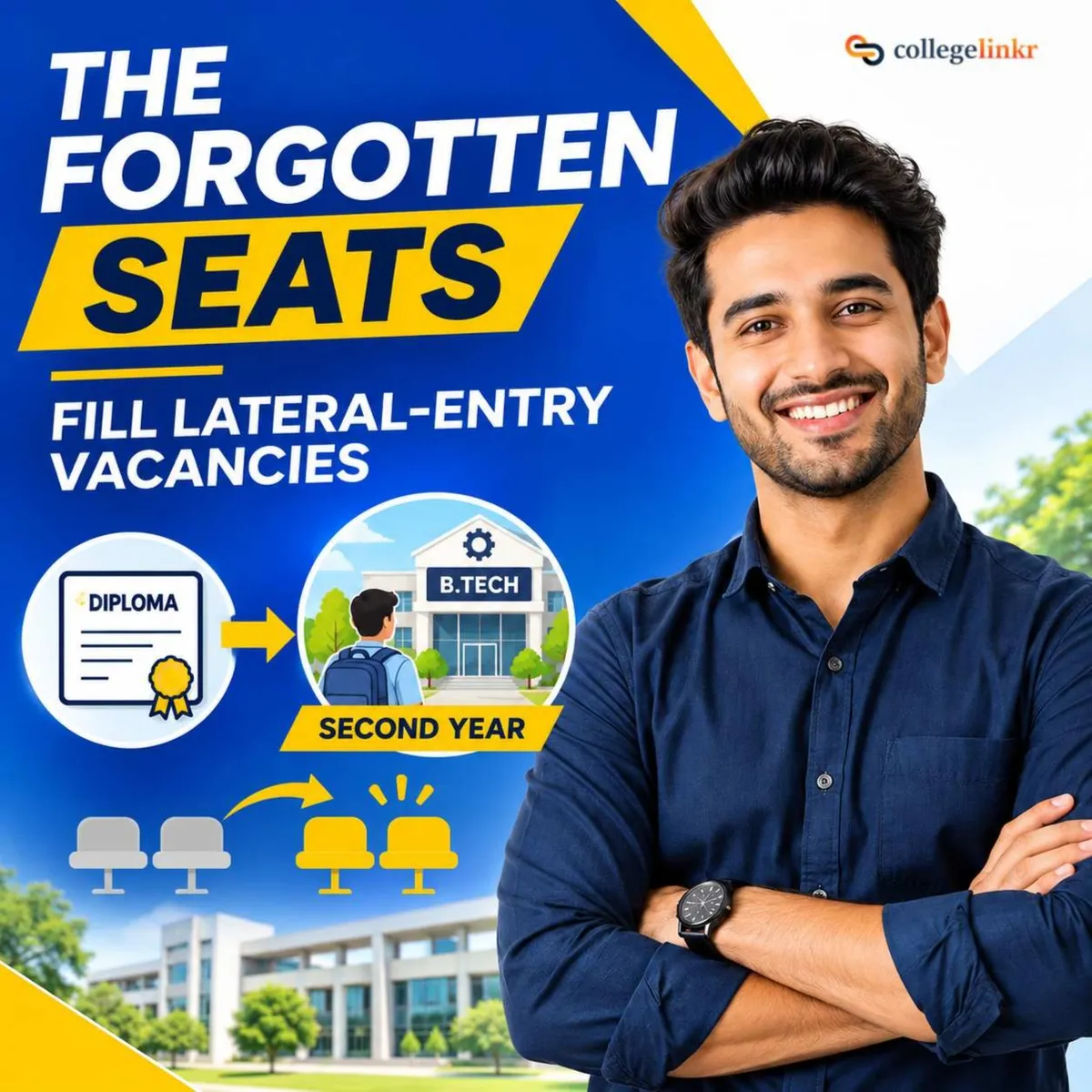
The Forgotten Seats: Filling Lateral-Entry and Second-Year Vacancies

Engineering colleges count first-year vacancies but often forget second-year seats. This guide explains how lateral-entry intake works under AICTE norms, what Maharashtra's data shows about direct second-year admissions, why colleges lose diploma students, and…
Second-year seats nobody counts
Every September, engineering colleges count their first-year vacancies. Very few count second-year vacancies with the same urgency. Yet an empty second-year seat costs three years of fees, not one.
These seats exist because of lateral entry. A diploma holder who has finished three years at a polytechnic can join B.Tech directly in the second year. Some colleges fill these seats easily. Many treat them as an afterthought, and it shows in their fourth-year class sizes.
Also Read
- Launching a New Programme? How to Fill the First Batch of a Course Families Haven't Heard Of
- What Consultants Check Before They Recommend Your College, and How to Pass
- Fees, Scholarships and Education Loans: What Every Admission Desk Should Explain Before a Student Commits
- Every Out-of-State Student Counts: How a PAN-India Admission Network Can Lift Your NIRF Outreach & Inclusivity Score
- Counselling the Parent, Not Just the Student: How Admission Teams Can Answer Family Concerns on Placements, Safety and ROI
- Struggling to Fill MBA Seats? Partner with CollegeLinkr and Connect with 10,000+ Admission Consultants Across India
- Eligibility Mismatches Cost More Than You Think: Why Pre-Screened, Document-Complete Applications Protect Your Admissions Office
How lateral-entry intake works
Under AICTE norms, lateral entry to the second year is allowed up to 10% of the approved intake as supernumerary seats, plus the seats left vacant in the first year. A 2022 report from Maharashtra's Higher and Technical Education Department noted that AICTE cut lateral intake from 20% to 10% from 2019-20, and that seats available for direct second-year admission are worked out as 10% of first-year intake plus the previous year's first-year vacancies.
A simple example, with made-up figures. Take a branch with a 120-seat intake that admitted only 80 students in first year. The next year, it can offer about 12 lateral seats plus the 40 left vacant, so roughly 52 second-year seats. Every one of them filled is a student paying fees for three years.
What Maharashtra's data shows
Maharashtra is one of the few states to publish these numbers clearly, and they're striking. According to that report, in 2021-22:
- First-year engineering intake was 1,25,578
- First-year admissions were 79,571
- First-year vacancies were 46,007
- The 10% lateral intake was 12,557
- Seats available for direct second-year admission were about 60,000
- Students admitted to direct second year were 55,832
The same report estimates 63,000 to 80,000 diploma pass-outs a year in the state, with 65% to 75% of them opting for an engineering degree admission. So the demand exists. The question for each college is simply whether those students choose you.
Where the diploma students are
Nationally, the Ministry of Education's AISHE directory listed 5,360 technical and polytechnic institutions when I checked it in November 2026. Many are government or aided polytechnics in district towns. Their final-year students start thinking about degrees in the fifth and sixth semesters, usually with very little guidance from anyone outside the campus.
That's your audience. Not Class 12 students in coaching hubs, but polytechnic final-years in places like Amravati, Nanded, Kolhapur and Ahmednagar.
Why colleges lose these students
Most of the reasons are fixable from inside the college:
- All outreach goes to Class 12. Nobody visits polytechnics.
- Second-year counselling happens late, and by the time the college is ready, students have joined elsewhere or taken jobs.
- Families worry about the jump from diploma maths to degree maths, and nobody explains the bridge support.
- Subject and credit mapping is unclear, so students don't know what they'll have to repeat.
- Hostel rooms go to first-years first, and lateral entrants are told "we'll see".
- State counselling rules on domicile and rounds confuse families, and colleges don't explain their institute-level options clearly.
What actually works
Visit polytechnics in your region while students are in their final year, ideally in January and February. Talk to the training and placement officer, not only the principal. They know which students want a degree.
Run a short session called something plain, like "From diploma to B.Tech". Cover subject mapping, maths bridge classes, fees, scholarships and hostel. Publish a branch-wise estimate of lateral seats early, even if it's provisional. Offer a summer bridge course before second year starts. Keep a fixed number of hostel rooms for lateral entrants.
And give the consultants who work with diploma students a clear lateral-entry sheet: eligibility, documents, fee, timeline and a contact who answers. Many of those consultants placed the same students in their diplomas three years earlier and still have the relationship.
Pharmacy colleges face a similar question with D.Pharm holders joining B.Pharm. Check the Pharmacy Council of India's current norms for your programme before planning intake.
How CollegeLinkr helps fill second-year seats
Listing lateral-entry seats on CollegeLinkr is free, and colleges pay only when an admission is confirmed. Members across India who counsel diploma students can see your second-year options, explain them to families and share application links. Applications arrive pre-screened against your eligibility criteria, with documents collected and forms submitted, and you manage them from the same dashboard as your first-year admissions.
For seats that would otherwise stay empty for three years, a pay-on-admission channel costs nothing until it works.
Your next step
This week, ask your admissions office for a branch-wise table covering the last three years: approved intake, first-year admissions, first-year vacancies, the 10% lateral figure and second-year admissions. Then list the ten nearest polytechnics and put visits for January in the calendar.
Resources
- Maharashtra Higher and Technical Education Department – Report on direct second-year engineering admissions (2022)
- AISHE – Higher Education Institution Directory
- AICTE – Approval Process
If diploma students are part of your intake plan, ask the admission consultants who work with polytechnic students to download the CollegeLinkr App, so they can see your second-year seats and apply on students' behalf through tracked links.
Frequently Asked Questions
Start Earning With CollegeLinkr
Every admission season you wait is income left on the table.
Join a growing network of Members turning students into confirmed admissions.
Free to join · No targets · Paid on confirmed admissions